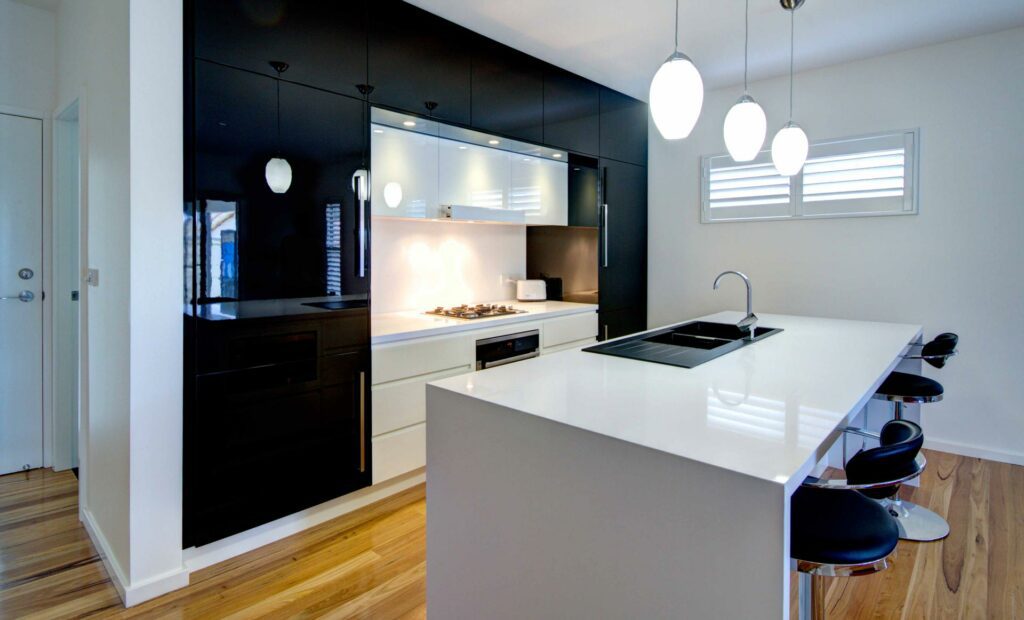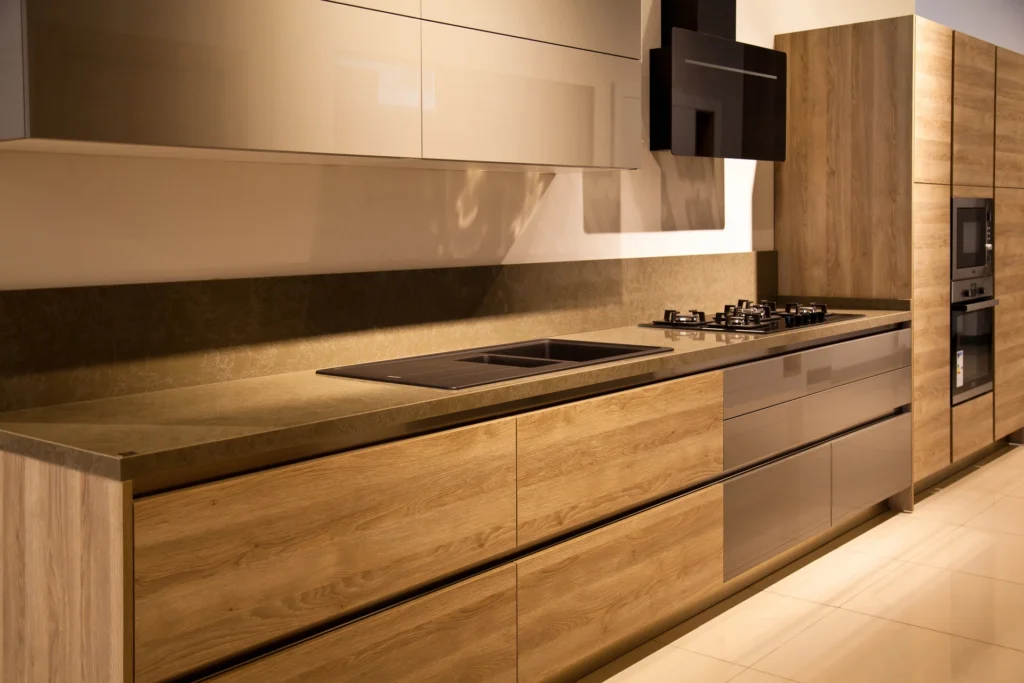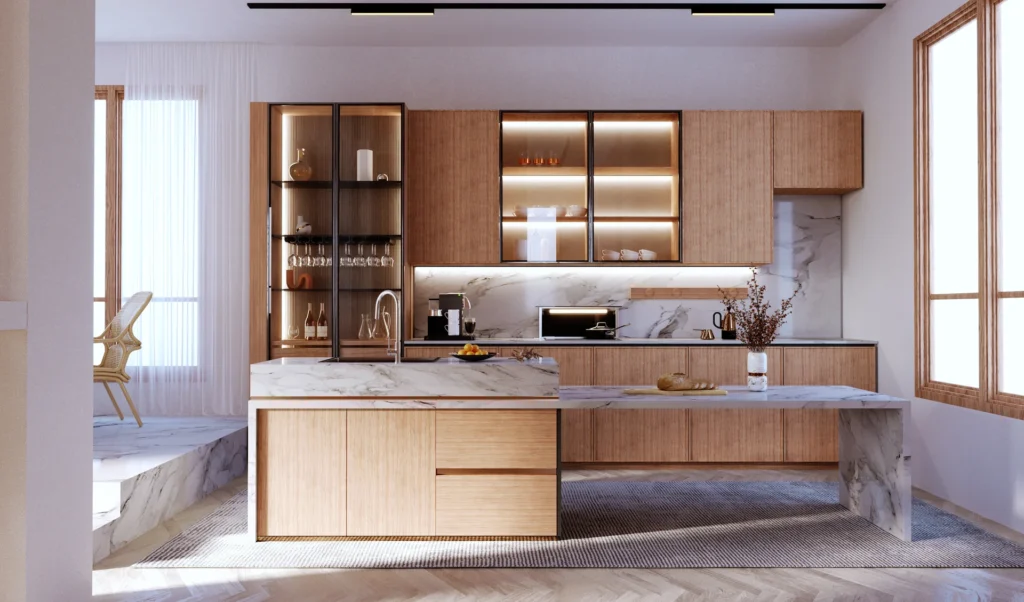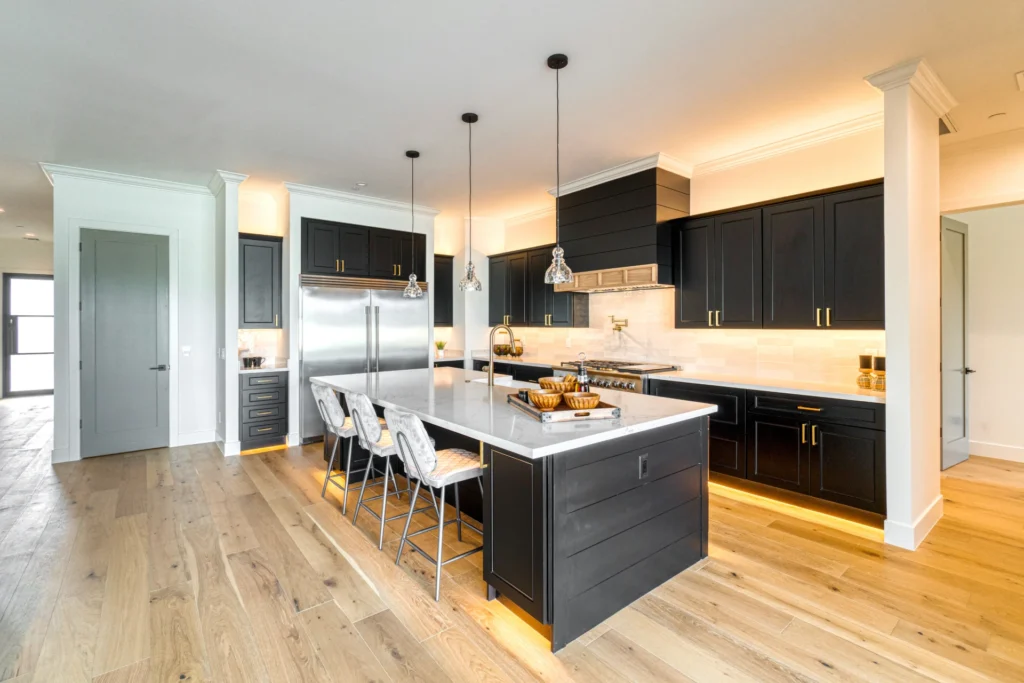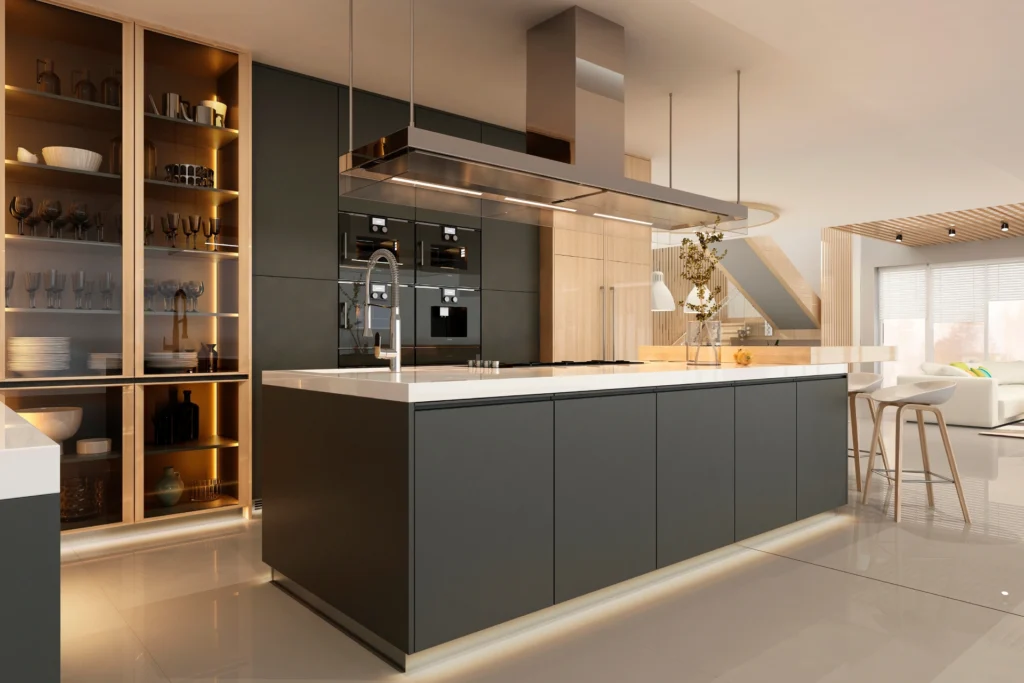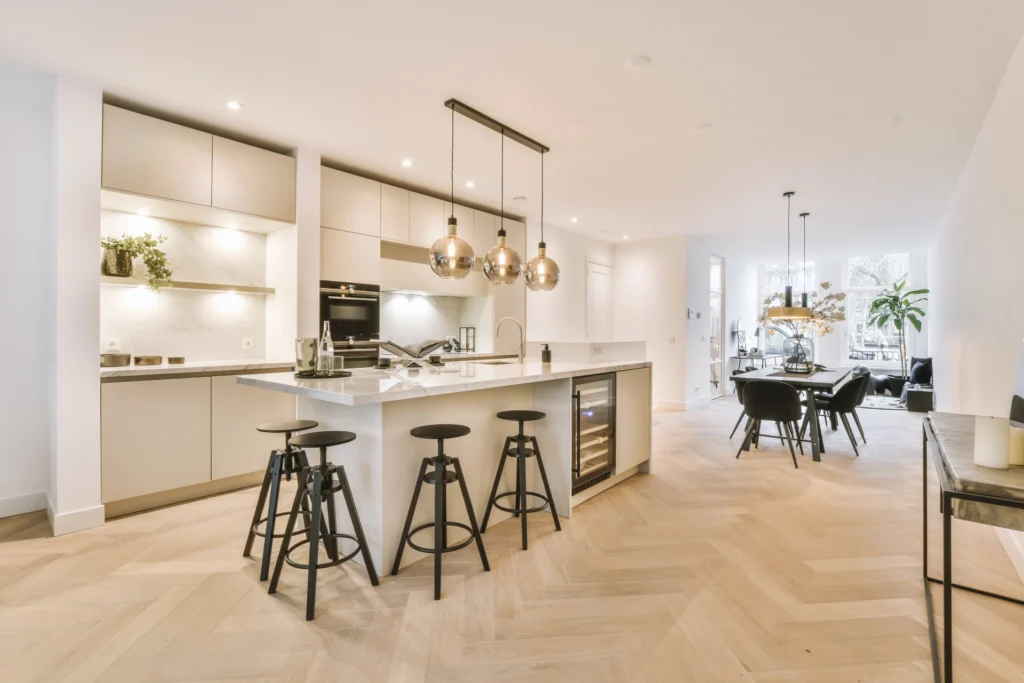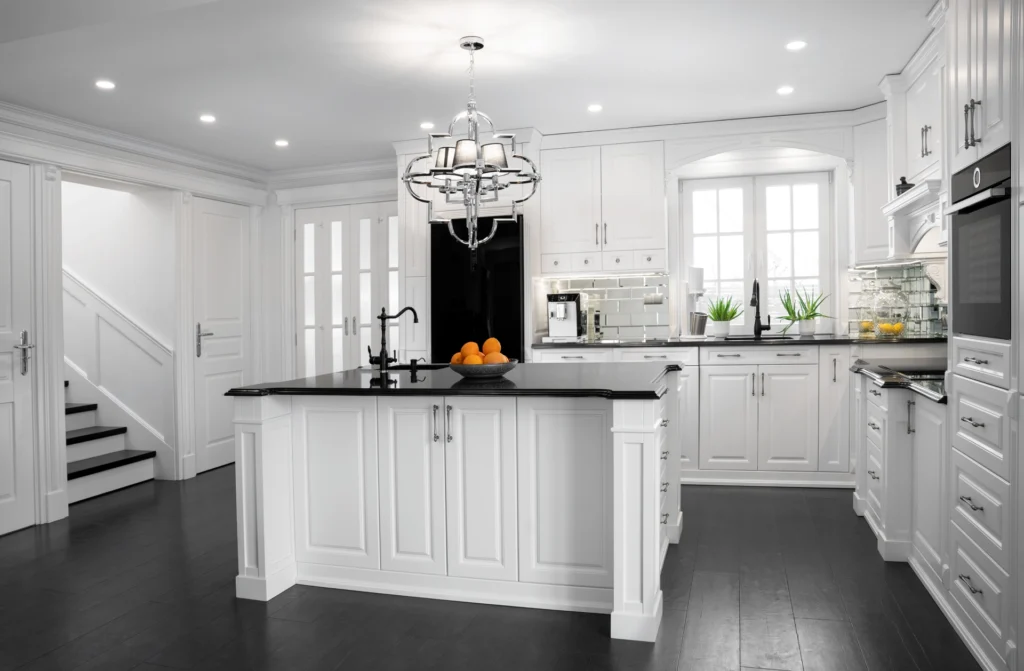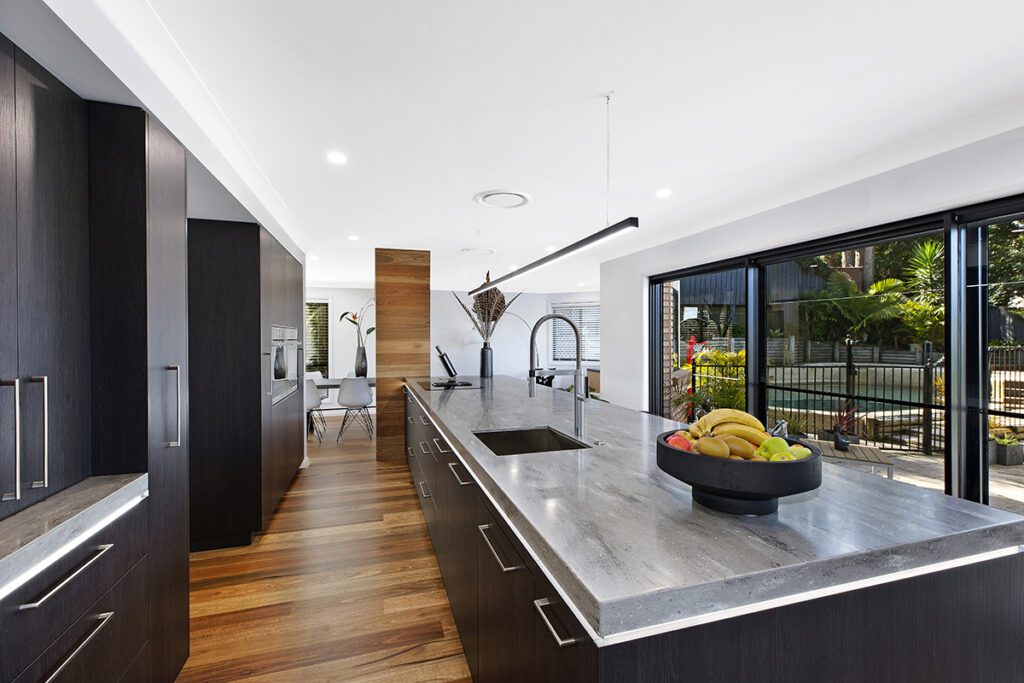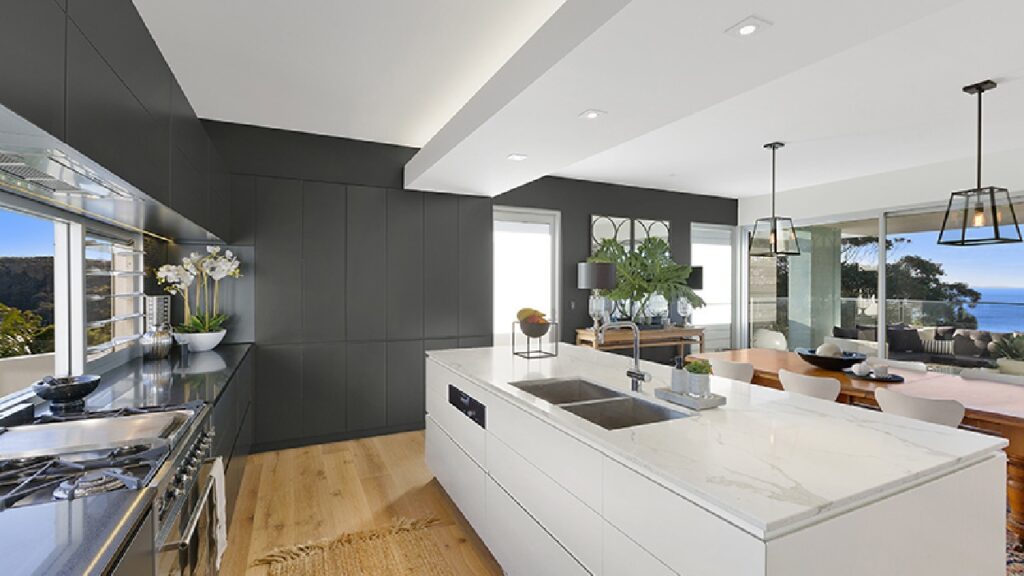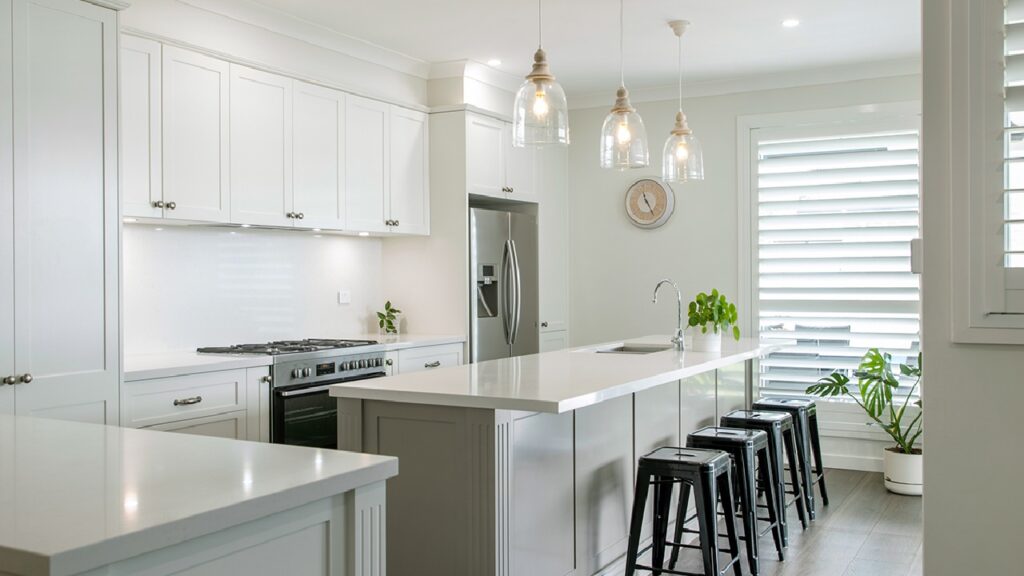


Tired of a cluttered benchtop, awkward layouts, or constantly bumping into things while cooking? Many kitchens look great on the surface but fall short when it comes to everyday use. A beautiful space isn’t much help if it isn’t practical.
Designing a functional kitchen means more than choosing trendy fixtures—it’s about creating a space that works seamlessly with your lifestyle. In this blog, we’ll break down the key considerations to help you plan a kitchen that’s stylish, efficient, and easy to use.
With the right approach, your kitchen can become the true heart of your home.
What Makes a Functional Kitchen?
A functional kitchen combines smart layout, efficient storage, quality appliances, and thoughtful design to support everyday tasks. From workflow to lighting, every element should enhance usability, comfort, and style—creating a space that works as beautifully as it looks.
1. Optimising Layout with the Work Triangle
An efficient kitchen layout centres around the “work triangle,” connecting the sink, hob, and fridge. This design reduces unnecessary movement, improving comfort and flow during food prep, cooking, and cleaning.
Positioning these three elements within close reach streamlines tasks and boosts usability. Ensuring clear paths between them also avoids congestion—especially useful in busy households or open-plan spaces.
Planit Tip: Keep triangle sides between 1.2 and 2.7 metres for smooth kitchen flow.
2. Maximising Storage Solutions
Good storage is essential for a clutter-free, functional kitchen. Clever cabinetry—like pull-out shelves and corner carousels—makes better use of space while keeping everything easily accessible.
Vertical storage, such as tall cupboards or wall-mounted racks, can unlock extra capacity. Customised solutions mean every item has its place, improving organisation and reducing daily stress.
Planit Tip: Use drawer inserts to neatly separate utensils and cutlery.
3. Selecting Suitable Appliances
Choosing the right appliances is about balancing size, performance, and energy efficiency. Energy-rated models help reduce power bills while supporting a more sustainable kitchen.
Strategic placement also matters. For example, putting the dishwasher near the sink simplifies rinsing and loading. Positioning the oven or microwave at the right height can also improve ease of use.
Planit Tip: Pick appliances that match your cooking style and space requirements.
- Kitchens are getting smarter! Learn more about smart kitchens.
4. Incorporating Effective Lighting
Lighting plays a big role in both function and atmosphere. Task lighting under cabinets helps with food prep, while ambient lighting ensures the space feels warm and welcoming.
Smart lighting systems allow you to adjust brightness for different tasks or moods. Motion sensors also boost efficiency by only lighting areas when needed.
Planit Tip: Install dimmable lights to fine-tune your kitchen’s brightness.
- Lighting is a vital consideration in sustainable kitchens. Learn more here.
5. Embracing Ergonomic Design
Ergonomic design makes your kitchen more comfortable and easier to use. Adjusting counter heights and ensuring wide walkways can reduce physical strain and improve movement.
Add features like soft-close drawers or pull-out shelves to limit bending and reaching. Store frequently used items within easy reach to speed up everyday tasks.
Planit Tip: Allow at least 90cm for walkways to move around safely and easily.
Designing a Functional Kitchen: Key Elements for a Space That Works Beautifully
Designing a kitchen isn’t just about style—it’s about creating a space that works for you. This blog explored the key elements of a functional kitchen, from layout and storage to lighting, appliances, and ergonomic design.
A well-planned kitchen can truly transform your daily life. When everything has its place and movement feels effortless, cooking becomes more enjoyable and time
Ready to start planning? Visit our showrooms or contact us today to explore countertop materials tailored to your custom kitchen.
Next steps:
- Learn more about our custom kitchen designs
- Visit our Central Coast showroom
- Any questions, contact us today
Sources: Wikipedia ; Grand Design Magazine ; Grand Design Magazine