

Choosing a kitchen style sounds simple.
Until you are comparing cabinet profiles, benchtops, handles, splashbacks, flooring, lighting and approximately 700 shades of white.
Then it becomes a little less simple.
The good news?
You do not need to memorise every design trend or develop a strong opinion about brushed nickel overnight.
You just need to understand what makes each style different, how it works in a real home and whether it suits the way you live.
In this blog, we explore five popular types of kitchen styles and explain how to choose the right one for your space.
What Are The Different Types Of Kitchen Styles?
Kitchen styles are broad design categories based on features such as cabinetry, colour, materials, hardware and layout.
Some are clean and minimal.
Others are more detailed, decorative or textural.
The main styles often overlap, which means your kitchen does not need to fit neatly into one box. You might prefer modern cabinetry with coastal colours, or Hamptons detailing with a more contemporary finish.
That is perfectly fine.
A kitchen should feel considered, not copied.
Exploring a wider range of kitchen styles can help you compare the details you like before you start choosing finishes.
5 Popular Kitchen Styles To Consider
Every kitchen style has its own personality.
Some are quiet and understated.
Others walk into the room wearing black tapware and asking where the pendant lights are.
Here are five popular options.
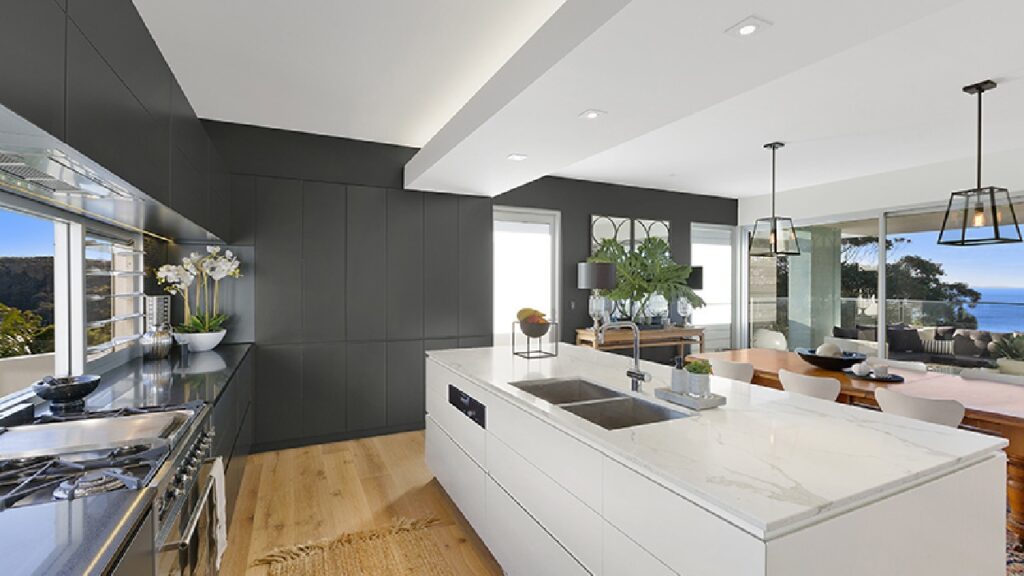
1. Modern Kitchens
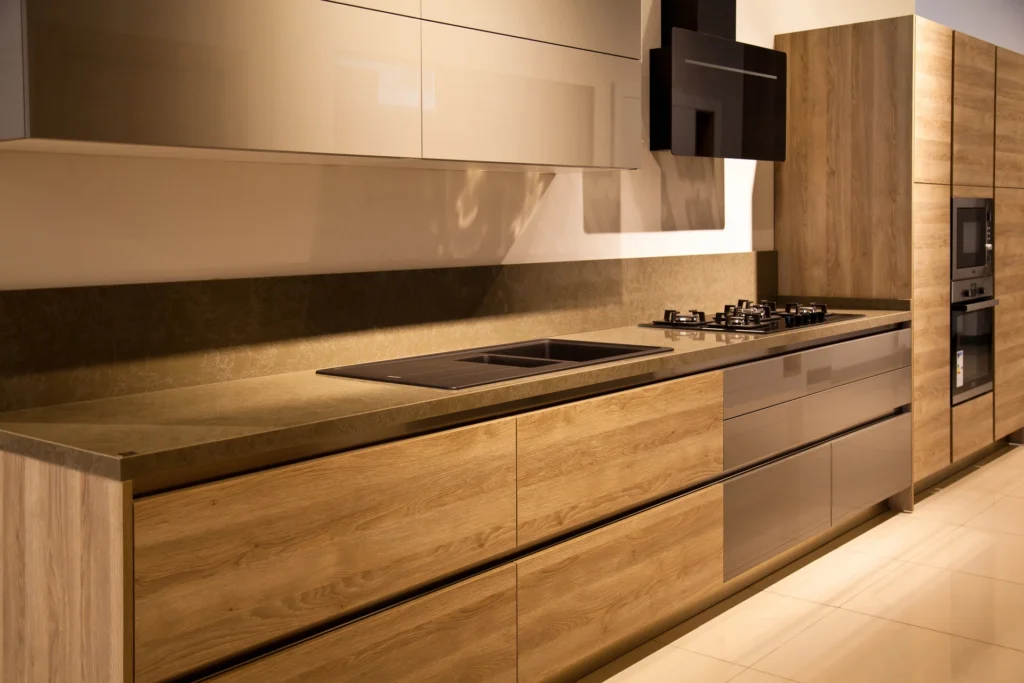
Modern kitchens are known for clean lines, simple cabinetry and an uncluttered finish.
They often feature flat-panel doors, integrated appliances, minimal handles and a restrained colour palette.
White, black, grey and timber are common choices, although modern design does not need to be neutral.
A deep green island or textured stone splashback can still work beautifully when the overall design remains simple.
The appeal of a modern kitchen is that it can make a room feel calm and organised.
Even when the second drawer is full of batteries, takeaway menus and three mystery keys.
Modern kitchens also work well in open-plan homes because they blend easily with nearby living and dining areas.
They are especially useful in smaller spaces, where clean cabinetry and integrated storage can reduce visual clutter.
Choose a modern kitchen if you like:
- Simple cabinetry: Flat or lightly profiled doors create a streamlined appearance.
- Minimal hardware: Handles are often subtle, recessed or removed altogether.
- Integrated storage: Appliances and storage zones are designed to sit neatly within the cabinetry.
- Easy maintenance: Smooth finishes and simple surfaces are usually straightforward to clean.
Modern kitchens suit homeowners who want a practical, polished space without too much decoration.
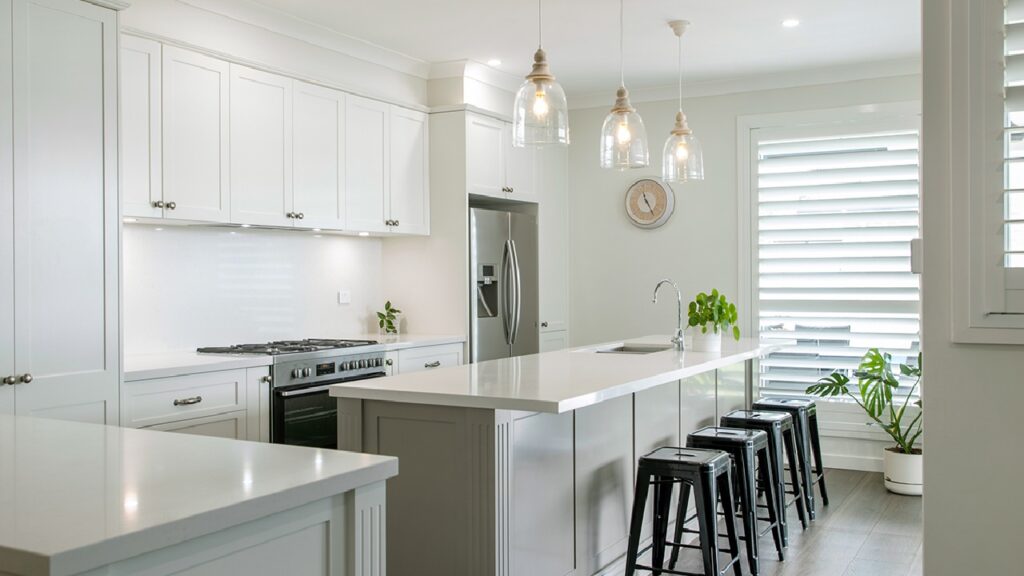
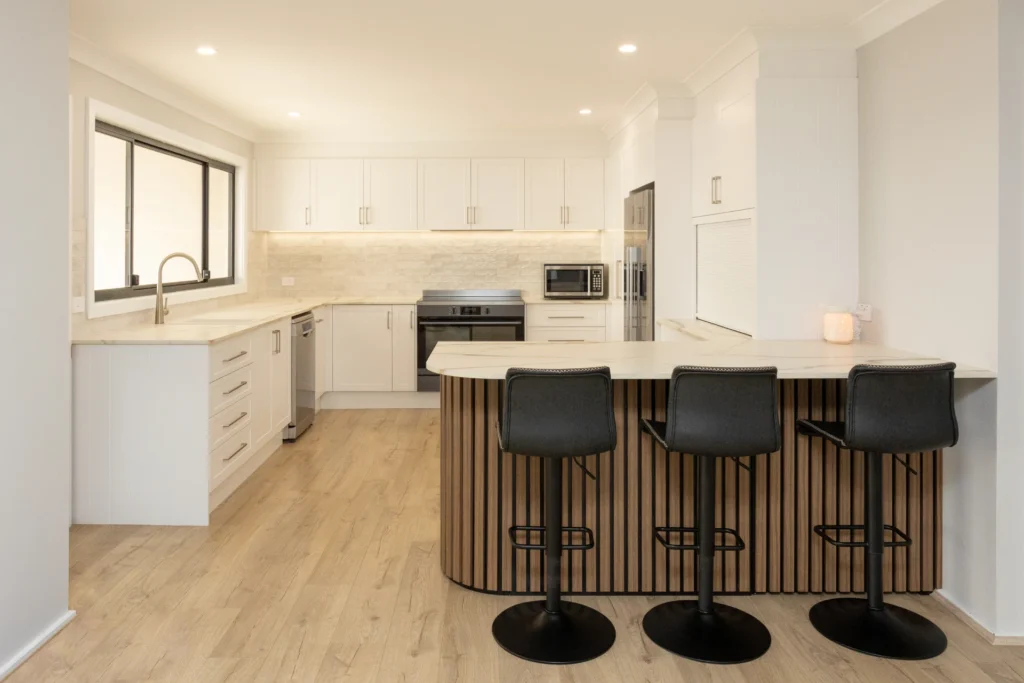
2. Coastal Kitchens
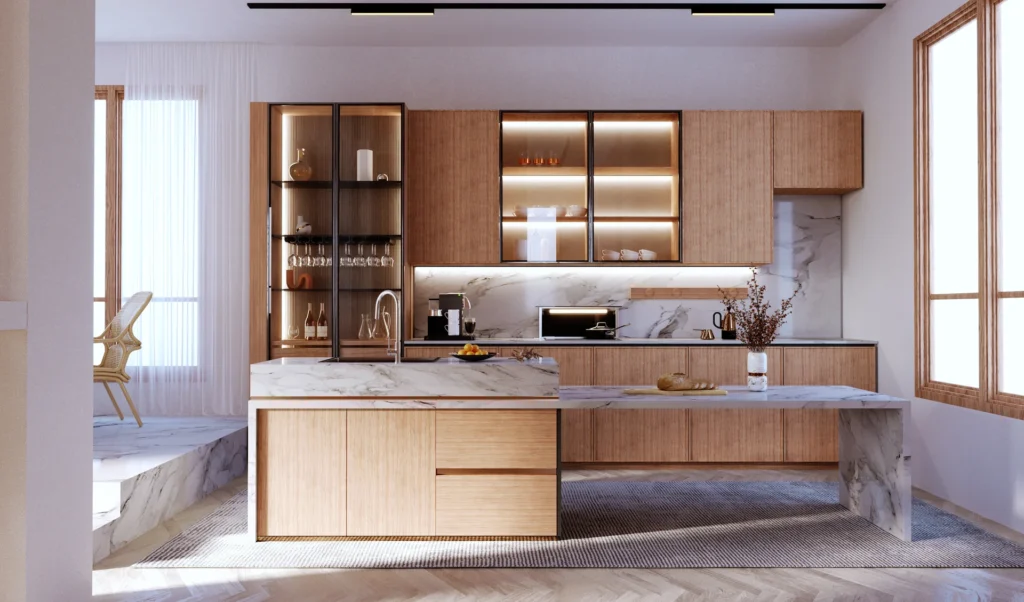
Coastal kitchens are light, relaxed and connected to natural materials.
They usually include pale colours, soft timber tones, shaker cabinetry and plenty of natural light.
White is common.
But it is not the only option.
Soft blue, pale grey, warm beige and muted green can all create a coastal feel without making the room look like a beach-themed café.
A well-designed coastal kitchen should feel calm rather than themed.
That means using natural textures and subtle colours instead of filling the room with shells, anchors and signs that say “life is better at the beach”.
The style works particularly well in Central Coast homes because it suits bright interiors, relaxed family living and indoor-outdoor spaces.
Natural timber, stone-look surfaces and woven accents can add warmth, while pale cabinetry helps reflect light through the room.
Choose a coastal kitchen if you like:
- Light colours: White, sand, soft blue and pale grey create an airy look.
- Natural textures: Timber, stone and tactile finishes add warmth and depth.
- Relaxed detailing: Shaker doors and subtle panelling create character without feeling formal.
- Bright spaces: Coastal kitchens work best when natural and artificial lighting are carefully planned.
The Australian Government’s kitchen and bathroom design guidance also highlights the importance of layout, accessibility and long-term usability when planning household spaces.
Because a kitchen should look good.
But it should also be easy to live with.
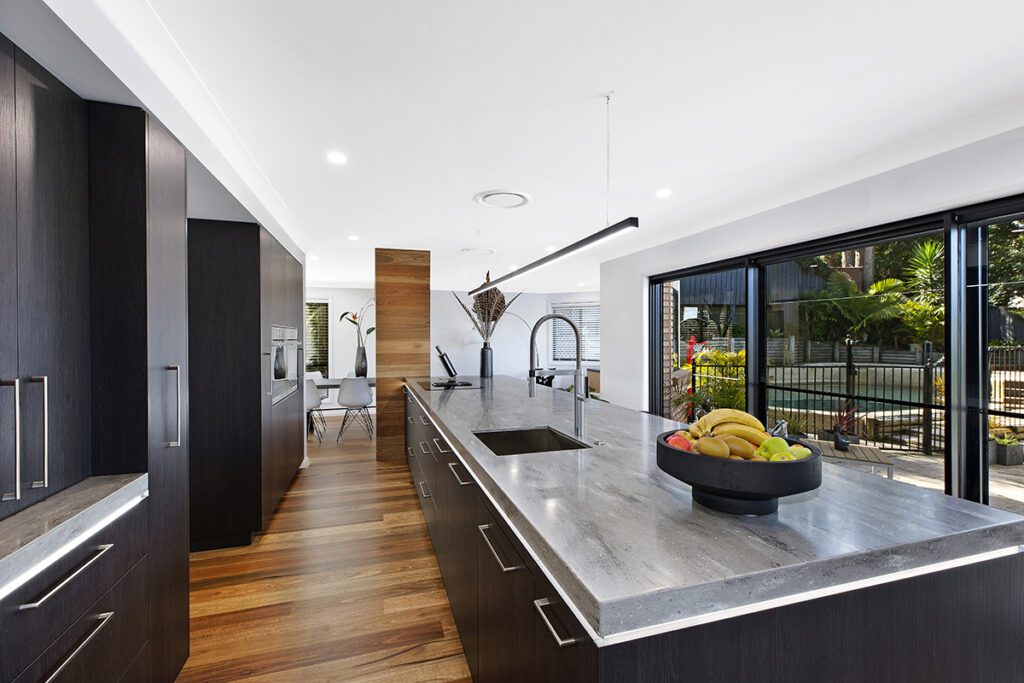
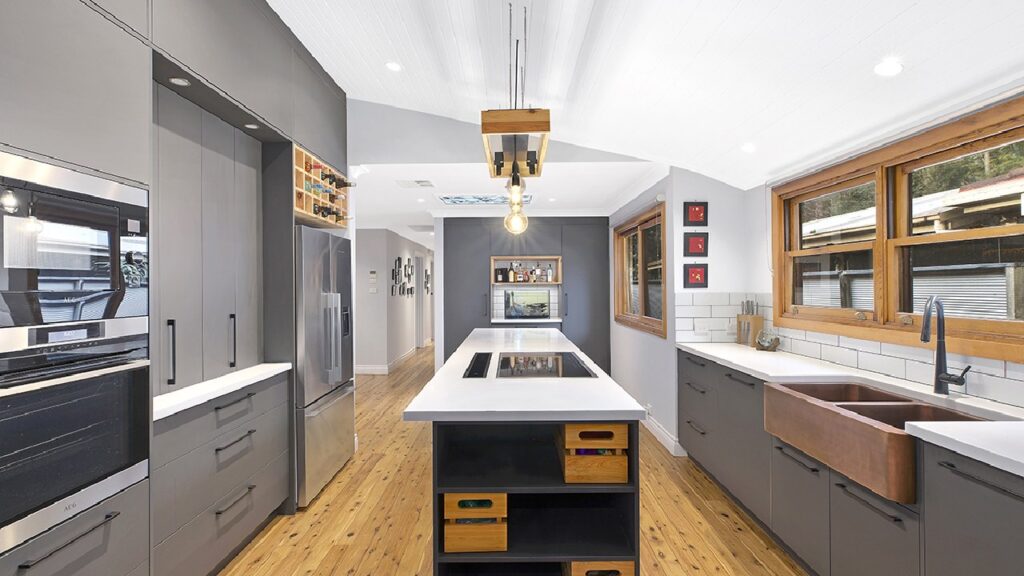
3. Industrial Kitchens
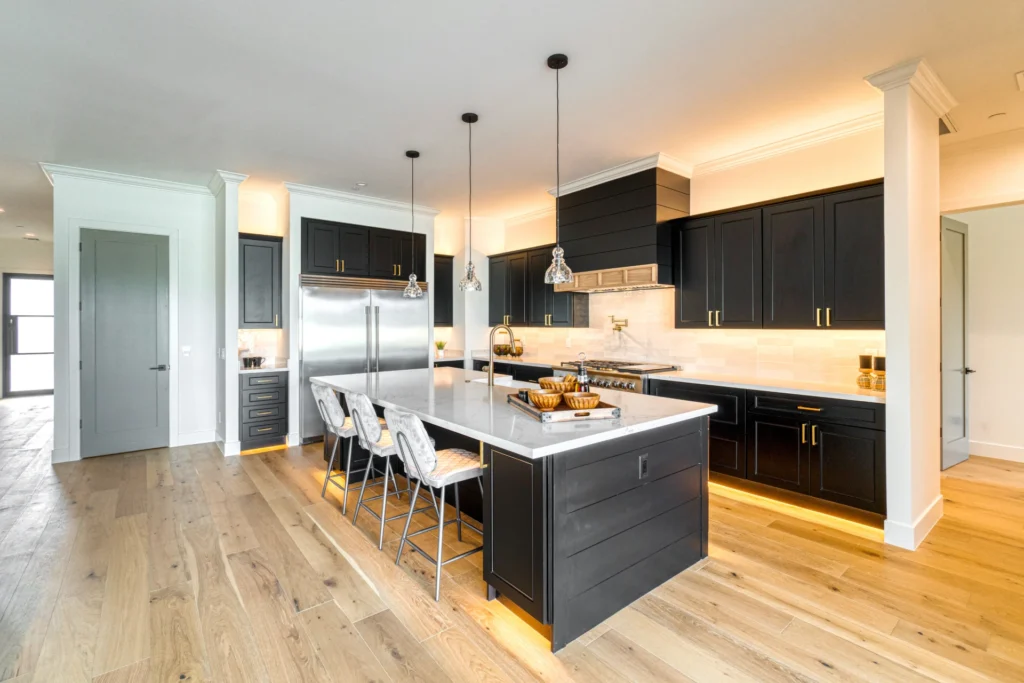
Industrial kitchens are bold, textured and practical.
They often combine dark cabinetry with concrete-look surfaces, metal details, exposed brick, black hardware and open shelving.
The style takes inspiration from commercial kitchens, warehouses and converted urban spaces.
That does not mean your kitchen needs to look like it closes at 11 pm and serves wood-fired pizza.
The best industrial kitchens balance heavier finishes with warmth.
Timber cabinetry, warm lighting or a pale floor can stop the room from feeling too dark.
A custom industrial kitchen can also be adjusted to suit a more conventional home.
You might use black-framed glass, a textured island or stainless steel details without committing to every industrial feature at once.
Choose an industrial kitchen if you like:
- Strong contrast: Dark cabinetry and pale benchtops can create a sharp, graphic look.
- Visible texture: Concrete, brick, metal and timber bring depth to the room.
- Practical materials: Durable surfaces support regular cooking and everyday use.
- Statement details: Lighting, hardware and splashbacks often play a larger visual role.
Industrial design works best when each material has a purpose.
Too many competing textures can make the room feel busy.
One strong feature usually has more impact than six of them arguing for attention.
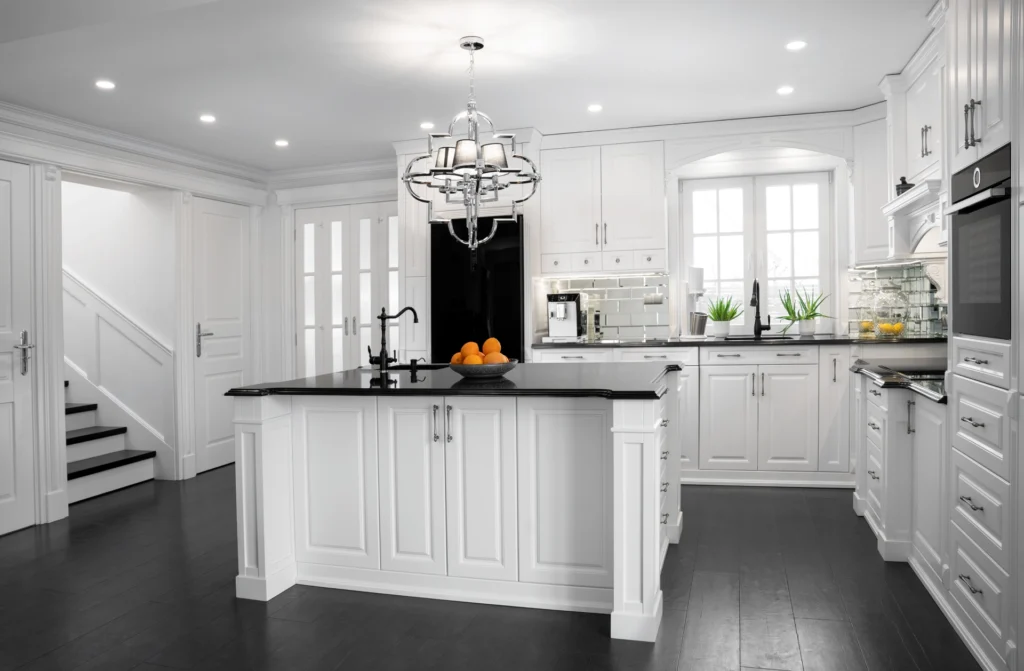
4. Hamptons Kitchens
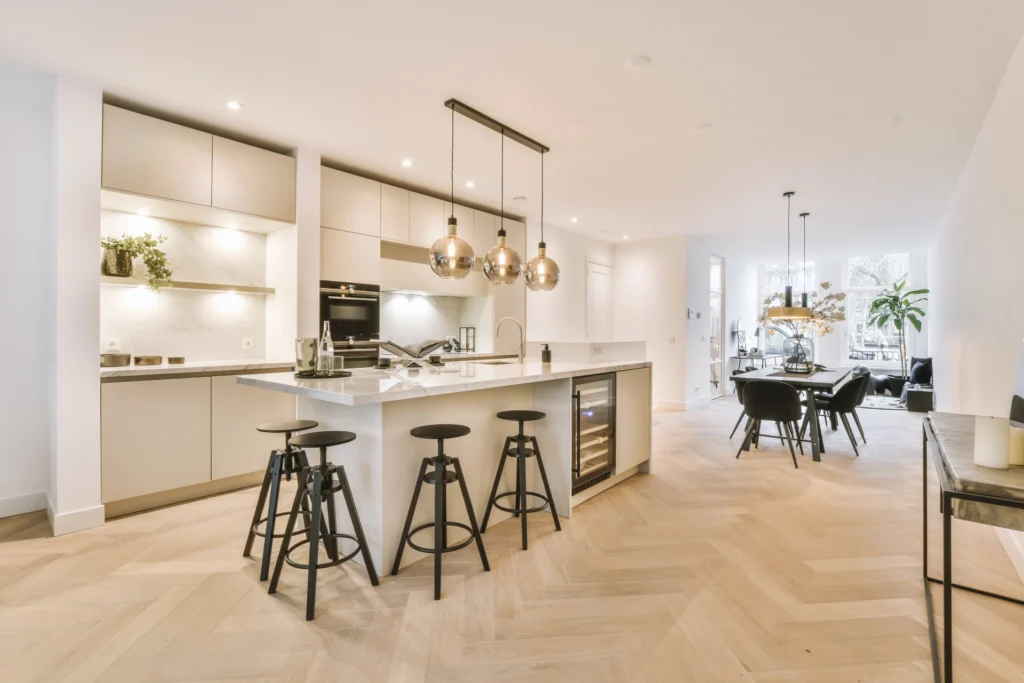
Hamptons kitchens are bright, refined and more decorative than modern or industrial designs.
They often include shaker cabinetry, large islands, panelled ends, pendant lights and detailed joinery.
White and soft grey remain popular choices, but navy, charcoal and muted green can give the style a more contemporary finish.
A Hamptons kitchen works particularly well in homes with enough space for its details to breathe.
Large islands, decorative cabinetry and symmetrical layouts can look elegant in a generous room.
In a smaller kitchen, those same features may need to be simplified.
Otherwise, the room can start to feel like every cupboard dressed up for the same event.
Hamptons kitchens often suit traditional, transitional and family homes because they combine practical storage with a softer, more detailed appearance.
Choose a Hamptons kitchen if you like:
- Detailed cabinetry: Shaker doors, mouldings and panelled finishes create visual depth.
- Balanced layouts: Symmetry is often used to make the space feel calm and organised.
- Classic colours: White, grey, navy and soft neutrals suit the style well.
- Statement islands: Large islands often become the main visual and social feature.
Hamptons design can feel timeless when the detailing is controlled.
The aim is elegance.
Not excess.
5. Contemporary Kitchens
Contemporary kitchens reflect current design ideas.
They often combine clean cabinetry with warmer materials, curved details, natural stone, coloured joinery and integrated technology.
This makes them different from modern kitchens.
Modern design is based on a recognised style.
Contemporary design keeps changing.
A contemporary kitchen might include flat-panel cabinetry, a curved island, timber finishes and a textured splashback in the same room.
That flexibility is one of its strengths.
It allows homeowners to use current materials and colours without following one strict design formula.
Choose a contemporary kitchen if you like:
- Current finishes: Natural stone, warm timber and muted colours are often used together.
- Flexible styling: Contemporary kitchens can borrow from modern, coastal or traditional design.
- Integrated technology: Appliances, lighting and power points are often incorporated discreetly.
- Personal details: Colour, texture and curves can add character without making the room feel busy.
Contemporary kitchens are ideal for homeowners who want something fresh but not overly trend-driven.
The key is knowing when to stop.
Not every popular finish needs an invitation.
How Do You Choose The Right Kitchen Style?
Start with the way you use the room.
A kitchen that looks beautiful but does not support your routine will become frustrating very quickly.
Before you think about colours or handles, consider:
- How many people use the kitchen: A busy family kitchen may need wider walkways, more storage and several preparation zones.
- How often you entertain: Regular entertainers may benefit from an island, additional seating or a separate drinks area.
- How much storage you need: Tall cabinetry, deep drawers and internal organisers can reduce clutter.
- How much maintenance you want: Some surfaces require more sealing, polishing or daily cleaning than others.
- How the kitchen connects to the home: The style should relate to nearby flooring, furniture, colours and architectural details.
It also helps to look at the building itself.
A sharply modern kitchen may suit a new apartment.
A Hamptons kitchen may feel more natural in a larger traditional home.
A coastal kitchen may work well in a light-filled property near the water.
But these are not strict rules.
The right design is the one that suits both the home and the people living in it.
Should Your Kitchen Match The Rest Of Your Home?
Yes.
But it does not need to match perfectly.
Your kitchen should feel connected to the surrounding rooms through colour, materials or proportion.
For example, timber flooring in the living area might be repeated through timber cabinetry or open shelving.
Black window frames might be echoed through handles, tapware or lighting.
This creates consistency without making every room look identical.
The Australian Government’s energy-efficient home design advice can also help you consider natural light, ventilation and material performance as part of the wider renovation.
These decisions may not be the most exciting part of the mood board.
But they can make a major difference to how comfortable the finished room feels.
Can You Mix Different Types Of Kitchen Styles?
Yes.
In fact, many successful kitchens combine more than one style.
You might pair modern cabinetry with coastal colours.
Or use Hamptons-style doors with contemporary lighting and a simpler island.
The trick is to choose one main style and use the second style as an influence.
This keeps the room cohesive.
A kitchen with industrial shelving, Hamptons cabinetry, coastal pendants, modern handles and a highly contemporary splashback may be trying a little too hard.
Keep the colour palette consistent.
Repeat key materials.
And make sure the details support each other.
Why Does Custom Kitchen Design Matter?
Custom design gives you more control over layout, storage, finishes and proportions.
That matters because not every home has straight walls, standard ceiling heights or generous floor space.
A custom kitchen can respond to the room you actually have.
Not the room a flat-pack cabinet manufacturer hoped you had.
Working with experienced custom kitchen specialists can help you test ideas against practical issues such as workflow, appliance placement, storage and installation.
It also allows cabinetry to be designed around your preferred style rather than forcing your style to fit standard cabinet sizes.
That is especially useful when combining different types of kitchen styles or adapting a detailed look to a compact space.
Which Kitchen Style Is Right For You?
The best kitchen style is not always the newest one.
And it is not necessarily the one receiving the most attention online.
It is the one that suits your home, supports your routine, and still feels right once the samples have gone back in the box.
Modern kitchens offer simplicity.
Coastal kitchens feel bright and relaxed.
Industrial kitchens bring texture and contrast.
Hamptons kitchens provide classic detail.
Contemporary kitchens offer flexibility.
Planit Kitchens has been designing, manufacturing, painting and installing custom kitchens for more than 33 years across the Central Coast, Sydney and Newcastle.
To discuss which style may work best in your home, contact the Planit Kitchens team and start planning a kitchen built around your space, taste and everyday routine.
Next Steps:
- Learn more about our custom kitchen designs
- Compare more kitchen styles
- Any questions? Contact us today