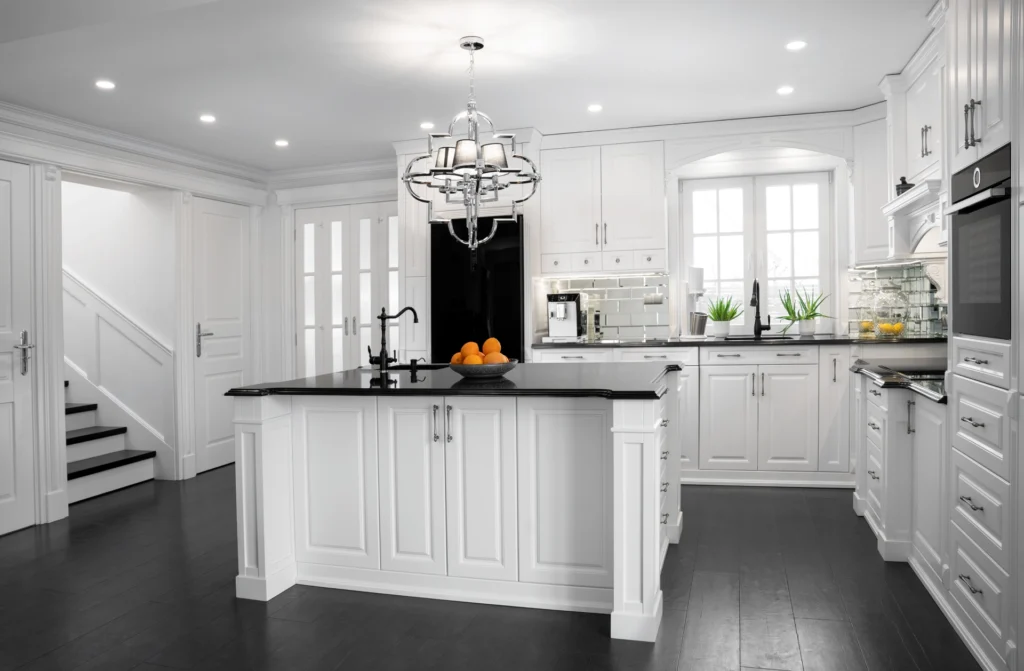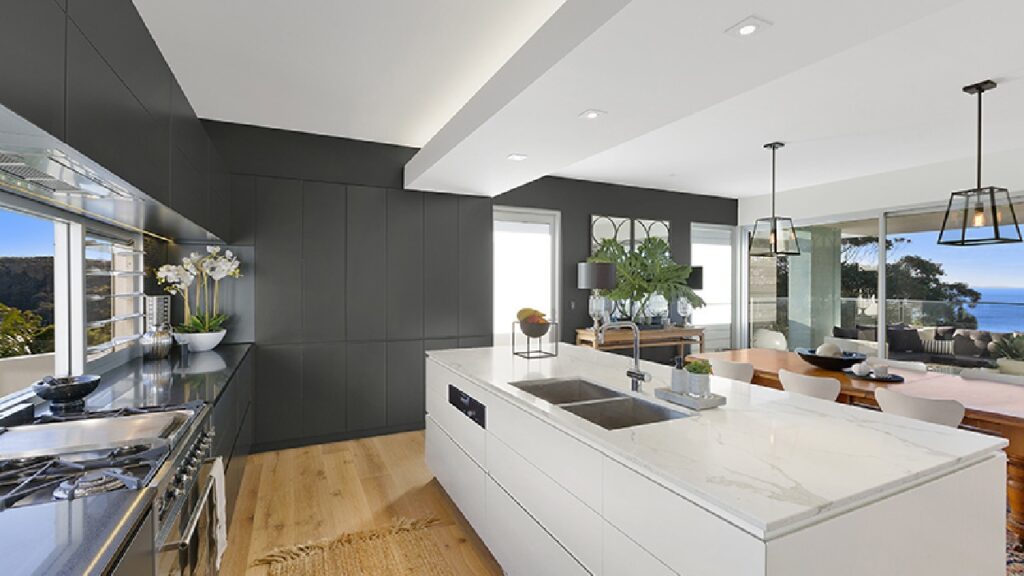


Kitchen lighting has one job.
Actually, it has several.
It needs to help you chop, cook, clean, find the right spice jar and make the room look good when nobody is holding a tea towel.
That is why choosing the best lighting for modern kitchens is about more than selecting one attractive pendant and hoping for the best.
A modern kitchen needs layers of light.
Some for visibility.
Some for atmosphere.
And some for making the benchtop look considerably tidier than it really is.
Below, we explore seven practical kitchen lighting ideas and explain where each one works best.
What Is the Best Lighting for Modern Kitchens?
The best lighting for modern kitchens combines three main types of light: ambient, task and accent lighting.
Ambient lighting provides general brightness across the room.
Task lighting focuses on work areas such as benchtops, sinks and cooktops.
Accent lighting highlights architectural features, cabinetry or materials.
Using all three creates a kitchen that feels comfortable, practical and visually balanced.
It also gives you more control over the mood.
Bright light is useful while cooking.
Softer light is better when the kitchen has officially stopped being a kitchen and has become somewhere to sit with a cup of tea.
When planning a modern kitchen, lighting should be considered alongside cabinetry, layout and finishes rather than added at the end.
7 Best Lighting Ideas for Modern Kitchens
A single ceiling fitting rarely does everything well.
The strongest modern kitchen lighting schemes use several light sources, each with a clear purpose.
Here are seven ideas worth considering.
1. Use Recessed Downlights for General Lighting
Recessed downlights are one of the most common choices for modern kitchens.
They sit neatly within the ceiling and provide broad, even illumination without adding visual clutter.
That makes them especially suitable for minimalist interiors.
But placement matters.
Rows of downlights positioned without reference to the cabinetry can create shadows exactly where you need visibility most.
For better results, place them above walkways, work zones and open areas rather than directly behind where someone will stand.
This helps reduce shadows across the benchtop.
Downlights also work well in open-plan homes because their simple form blends with nearby living and dining areas.
Choose dimmable fittings where possible.
This allows the room to move from bright working light during meal preparation to a softer level later in the evening.
In a carefully designed contemporary kitchen, recessed lighting can provide a clean base layer while feature fittings add personality.
The goal is even coverage.
Not a ceiling that resembles an airport runway.
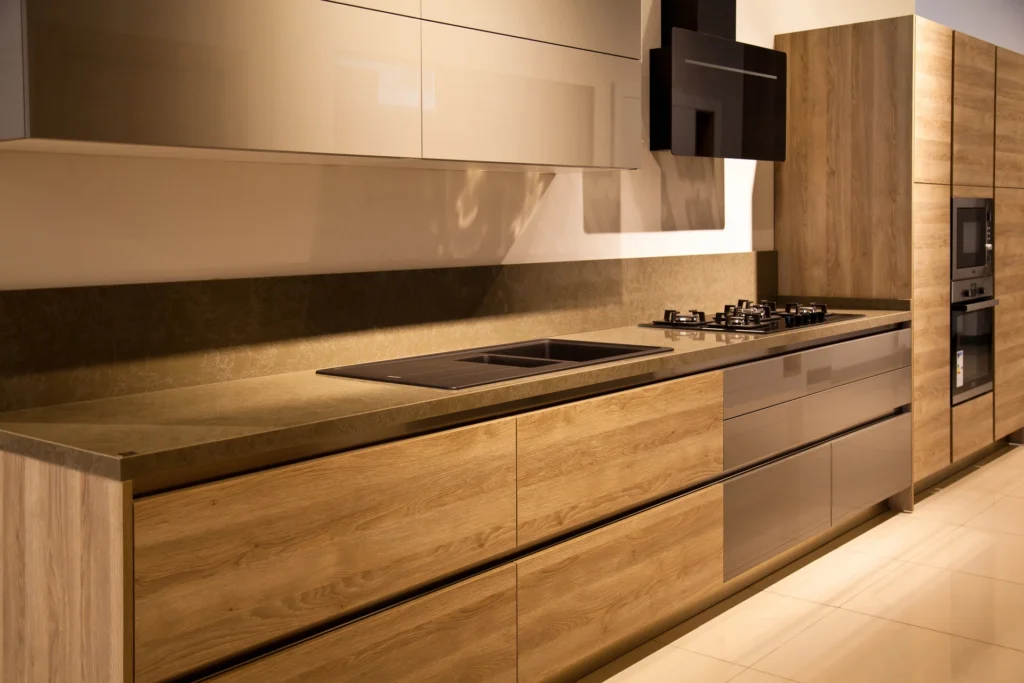
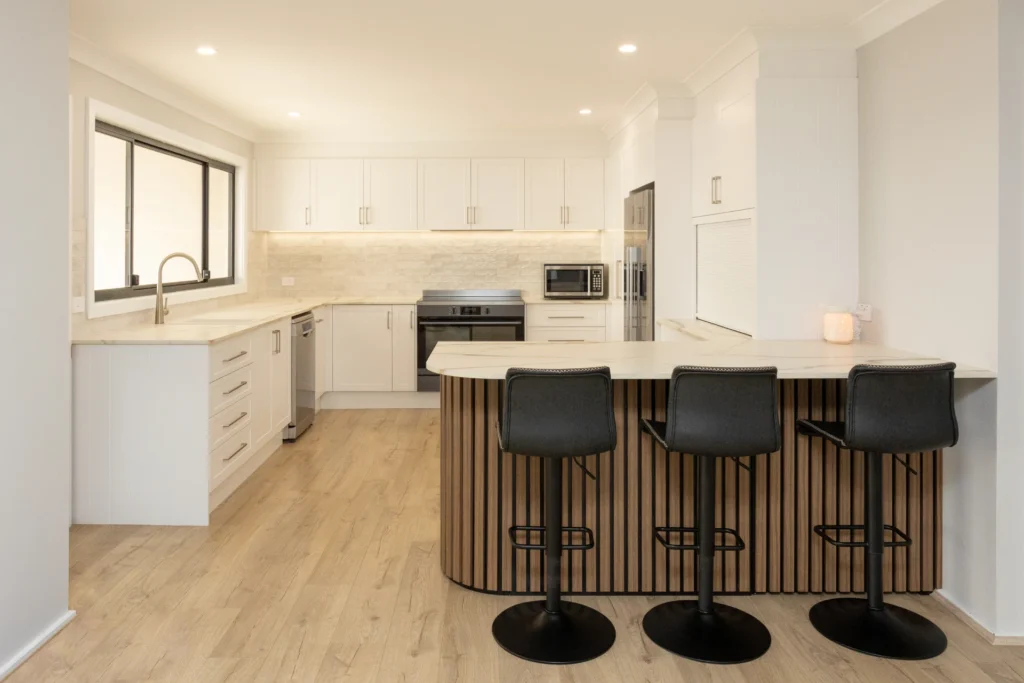
2. Add Under-Cabinet Lighting for Benchtops
Under-cabinet lighting is one of the most useful additions to any kitchen.
It directs light onto benchtops, where preparation work actually happens.
Without it, overhead fittings can leave shadows beneath wall cabinets.
That can make chopping, reading labels and cleaning surfaces more difficult.
LED strips are a popular choice because they create a continuous line of light.
They are also discreet, energy efficient and available in different colour temperatures.
For a clean finish, the strip should be concealed within a channel or recess.
This prevents individual LED dots from being visible.
Under-cabinet lighting works particularly well in a coastal kitchen, where it can brighten pale cabinetry and support the light, open feel of the room.
It is also useful in darker schemes, where it provides contrast against deeper cabinet colours.
Consider placing the lighting closer to the front edge of the cabinet.
This generally spreads light more evenly across the work surface.
Good task lighting should make the benchtop easier to use.
It should not feel like a spotlight interrogation for the toaster.
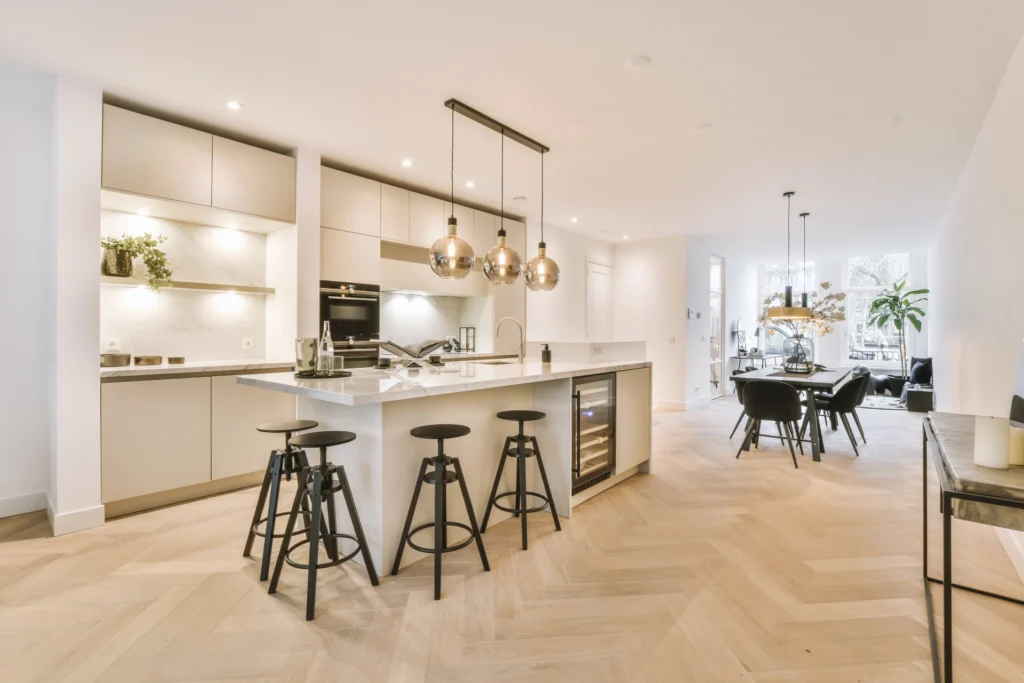
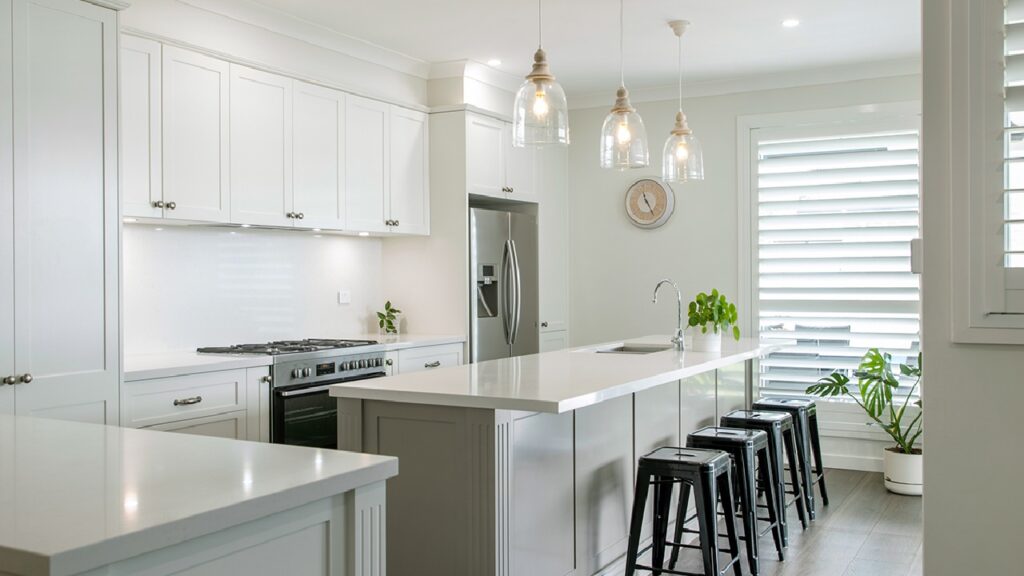
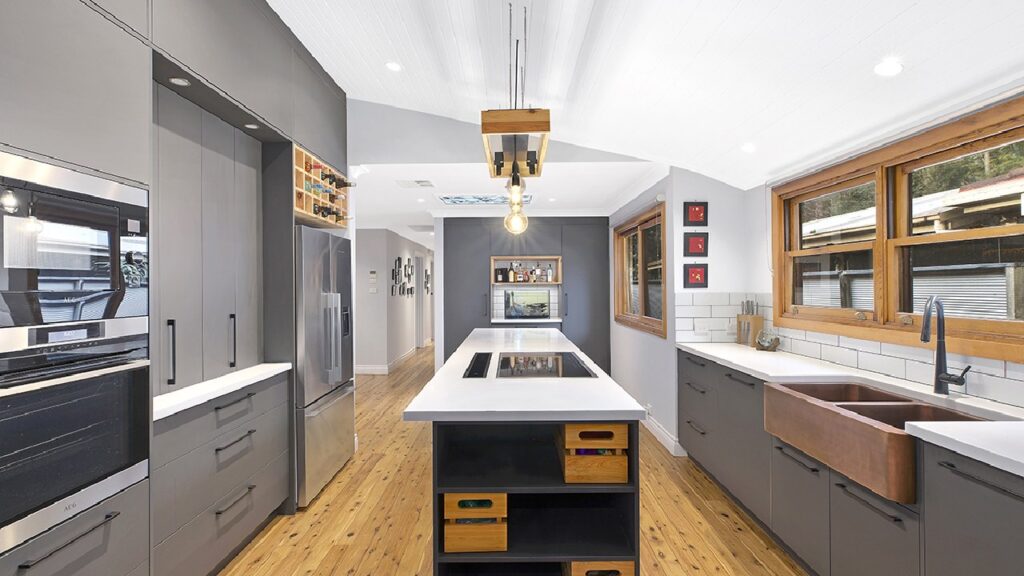
3. Make Pendant Lights Work Harder
Pendant lights are often treated as decorative features.
But the right fitting can provide useful task lighting as well.
They are commonly positioned above kitchen islands, breakfast bars or dining areas.
In modern kitchens, pendants can soften flat cabinetry and straight lines by introducing shape, texture or colour.
Large dome fittings create a bold focal point.
Slim linear pendants suit minimalist layouts.
Glass pendants allow more visual openness, which can help in smaller rooms.
The size and spacing should relate to the island beneath them.
A very small pendant above a large island can look lost.
Several oversized fittings in a compact kitchen can feel crowded.
As a general design principle, leave enough space between pendants to keep the arrangement balanced and avoid blocking sightlines.
The style can also reflect the wider kitchen design.
Black metal pendants may suit an industrial kitchen, while softer glass or fabric shades may work better with a coastal or classic interior.
The fitting should support the room.
Not behave as though it has been waiting all year for its solo.
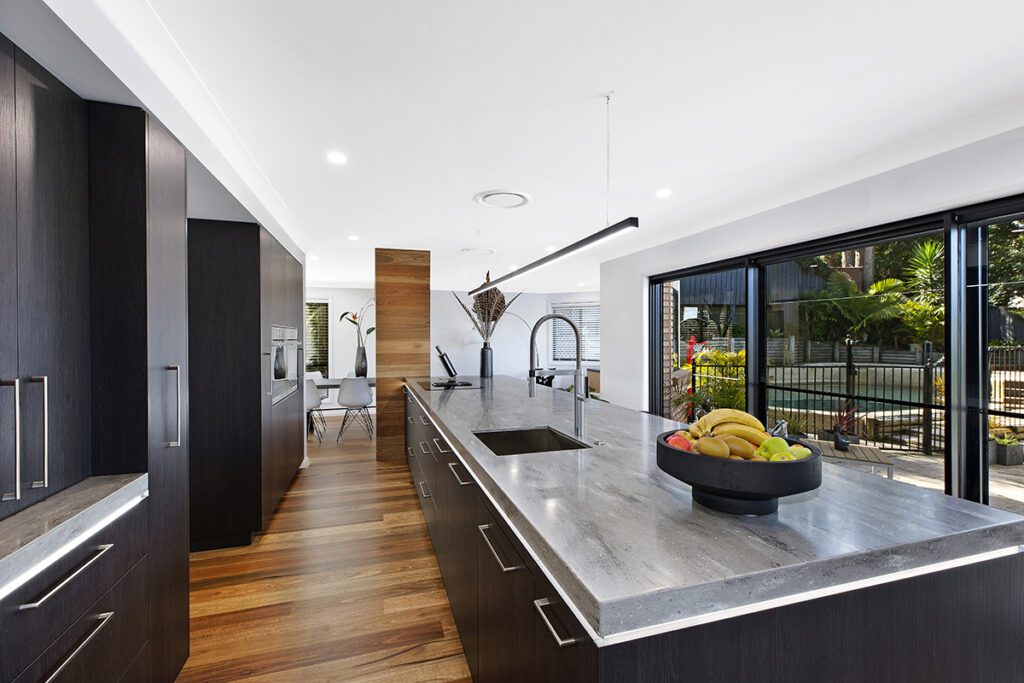
4. Use Linear Lighting Over Long Islands
Linear lighting is ideal for long kitchen islands.
Instead of using several separate pendants, one elongated fitting can provide more consistent illumination across the surface.
This can create a cleaner appearance, particularly in modern and contemporary kitchens.
Linear fittings are available in simple bars, suspended profiles and sculptural forms.
A slim black fitting can add definition without overwhelming the room.
A brass or textured finish can introduce warmth.
The most important consideration is proportion.
The light should be long enough to relate to the island, but not so long that it reaches beyond the work surface.
It should also be hung at a height that provides useful light without obstructing views.
This is especially important in open-plan spaces, where the kitchen connects directly with living or dining areas.
A linear fitting can help define the kitchen zone while keeping the overall room visually connected.
When comparing different kitchen styles, you will notice that lighting often plays a major role in separating one look from another.
The shape may be simple.
The effect rarely is.
5. Include Lighting Inside Cabinets and Drawers
Internal cabinet lighting is practical, subtle and very satisfying.
Especially when it turns on automatically.
Lighting inside tall cupboards, pantries, and deep drawers makes stored items easier to find.
It is particularly helpful in corners, where ambient light may not reach.
Sensor-operated fittings are usually the most convenient option.
They activate when the door or drawer opens and switch off when it closes.
This avoids unnecessary energy use and removes the need for visible switches.
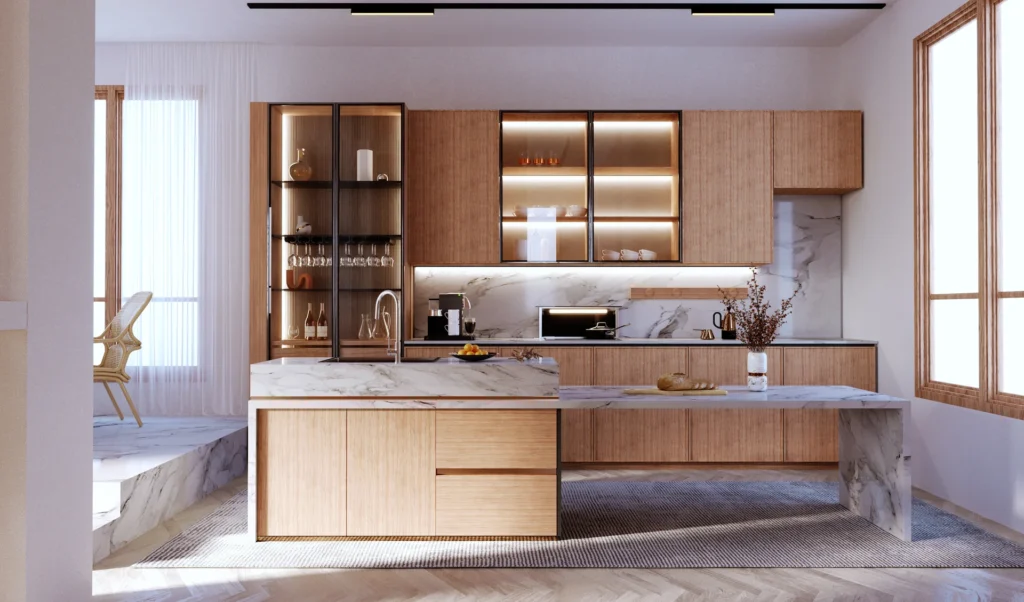
Internal lighting also works well in glass-front cabinets.
Here, it serves both a practical and decorative purpose by highlighting glassware, ceramics or display items.
In a Hamptons kitchen, soft cabinet lighting can draw attention to detailed joinery and traditional display cabinetry.
In a modern kitchen, it can be almost invisible until needed.
That is the point.
Good internal lighting supports the cabinetry rather than competing with it.
It also reduces the chance of finding six open packets of pasta only after buying a seventh.
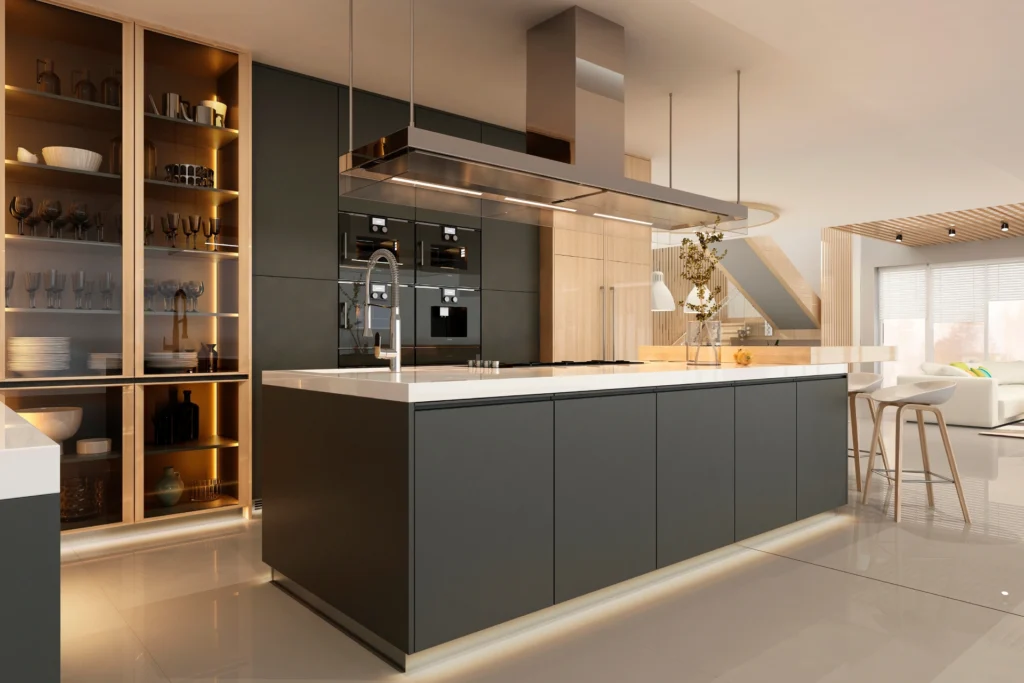
6. Highlight Kickboards, Shelves and Architectural Details
Accent lighting adds depth to a modern kitchen.
It can be installed beneath kickboards, along open shelves, inside niches or around architectural features.
Used carefully, it makes cabinetry appear lighter and creates a softer atmosphere in the evening.
Kickboard lighting can give base cabinets a floating effect.
Shelf lighting can highlight timber, stone or decorative objects.
Lighting inside recessed niches can create contrast against the surrounding cabinetry.
The keyword is carefully.
Too much accent lighting can make a kitchen feel busy or overly theatrical.
A few well-placed details are usually more effective than outlining every available edge.
Accent lighting is especially useful in darker kitchens, where it helps define layers and textures.
It can also soften highly streamlined cabinetry by adding warmth and dimension.
A custom kitchen design allows channels, recesses and wiring to be planned into the joinery from the start.
This produces a cleaner finish than trying to add lighting after installation.
Modern lighting works best when you can see the effect.
Not the cable responsible for it.
7. Choose the Right Colour Temperature
Colour temperature affects how warm or cool a light appears.
It is measured in kelvins.
Lower numbers create warmer, more yellow light.
Higher numbers create cooler, whiter light.
For most homes, warm white or neutral white lighting works well in kitchens.
Warm white can make timber, stone and soft colours feel more inviting.
Neutral white can provide clearer task lighting and suit cooler finishes.
The important thing is consistency.
Mixing very warm pendant lights with cool under-cabinet LEDs can make the room feel disconnected.
It can also change how paint colours and benchtops appear.
Always test lighting against your selected materials where possible.
A cabinet colour that looks soft and warm in daylight may look grey under a cooler fitting.
Colour rendering is also worth considering.
Lights with a high colour rendering index display colours more accurately, which is useful when preparing food and matching finishes.
For broader advice on lighting efficiency and home design, the Australian Government’s YourHome resource provides information on energy use, daylight and comfortable interiors.
The right colour temperature should make the kitchen feel natural.
Not like a supermarket freezer aisle.
How Should Kitchen Lighting Be Layered?
Start with general lighting.
This establishes an even level of brightness across the room.
Then add task lighting above the areas where work takes place.
These may include:
- Benchtops: Under-cabinet lighting improves visibility for preparation and cleaning.
- Kitchen islands: Pendants or linear fittings provide focused light and help define the island.
- Cooktops and sinks: Dedicated lighting reduces shadows in frequently used work zones.
- Pantries and cabinets: Internal lights make storage easier to use.
- Shelves and features: Accent lighting adds depth and highlights materials.
Each layer should operate separately where possible.
This gives you more control.
You may need full lighting while cooking.
Later, pendants and under-cabinet lights may be enough.
Dimmers make this flexibility even greater.
They also prevent the kitchen from remaining at full brightness during a quiet evening, which is useful unless you enjoy relaxing under the lighting conditions of a dental surgery.
Where Should Kitchen Lights Be Positioned?
Lighting should follow the layout.
Not simply the centreline of the ceiling.
Consider where people will stand, where work will happen and how cabinet doors may affect the light.
Downlights positioned behind a person can cast shadows across the benchtop.
Pendants hung too low can block views.
Under-cabinet strips mounted too far back can illuminate the wall more than the work surface.
Before electrical work begins, mark the key areas on the plan.
These usually include the sink, cooktop, preparation zones, island and pantry.
It is also useful to consider how natural light changes throughout the day.
A kitchen with large windows may need less artificial light in the morning but more in the evening.
Broader information from NSW Fair Trading can help homeowners understand planning and renovation responsibilities before work starts.
Any electrical installation should be completed by a suitably licensed professional.
Kitchen lights are worth planning carefully.
Kitchen wiring is not a suitable weekend experiment.
How Do You Match Lighting to Different Kitchen Styles?
Lighting should complement the cabinetry and materials without becoming too predictable.
A modern kitchen may suit recessed fittings, slim pendants and concealed LED strips.
A coastal kitchen may work well with soft glass, pale finishes or woven details.
An industrial design can support black metal, exposed fittings and stronger shapes.
A Hamptons kitchen may suit traditional pendants, glass shades or brushed metal finishes.
A contemporary kitchen allows more freedom.
Curved forms, sculptural fittings and unusual materials can work well when the surrounding design remains controlled.
The best result often comes from contrast.
A highly minimal kitchen may benefit from one expressive pendant.
A detailed kitchen may look better with simpler lighting.
This creates balance.
It also prevents every feature in the room from competing for the title of Most Interesting Object.
Is LED Lighting Best for Modern Kitchens?
LED lighting is generally well suited to modern kitchens.
It is efficient, long-lasting and available in many forms.
These include downlights, strips, linear pendants and cabinet lights.
LEDs also produce less heat than some traditional lamp types, which can make them useful inside joinery.
However, quality varies.
Cheap LED strips may show uneven colour, visible dots or poor dimming performance.
They may also use different colour temperatures across fittings.
Choose products with appropriate brightness, colour temperature and colour rendering.
It is also worth checking whether the fittings and dimmers are compatible.
The Australian Building Codes Board provides broader information about building requirements through its building guidance and resources.
A qualified electrician can advise on installation, controls and compliance for the specific project.
Which Is the Best Lighting for Your Modern Kitchen?
The best lighting for modern kitchens is layered, flexible and planned around the way the room is used.
Downlights create general brightness.
Under-cabinet LEDs improve task visibility.
Pendants and linear fittings define islands.
Internal cabinet lights make storage easier to use.
Accent lighting adds depth.
And the right colour temperature keeps the entire scheme consistent.
No single fitting needs to do everything.
That is good news for the pendant light.
It was under a lot of pressure.
Planit Kitchens has more than 33 years of experience designing, manufacturing, painting and installing custom kitchens across the Central Coast, Sydney and Newcastle.
To plan cabinetry, finishes and lighting as one complete design, contact the Planit Kitchens team and discuss a kitchen created around your home and daily routine.
Next Steps:
- Explore a custom modern kitchen design
- Compare more kitchen styles
- Ready to discuss your project? Contact us today